
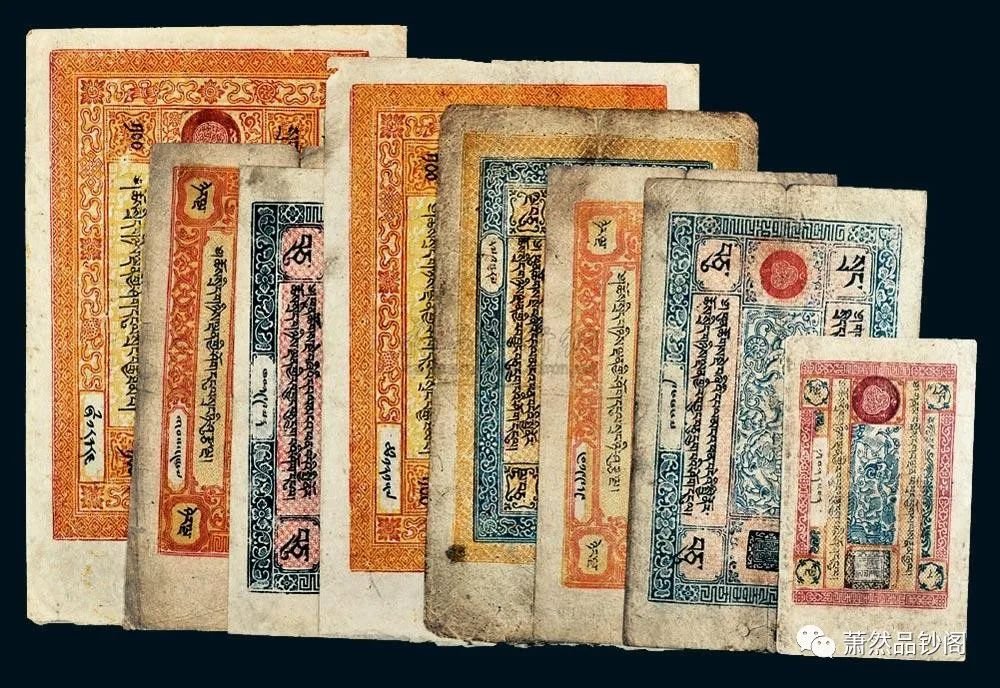
The term "Tibetan currency" pertains to the coins and paper money produced and circulated by the previous Tibetan administration mint. There are five variations of paper money, consisting of both single and multiple colours. They were printed in 1913 and were utilized until 1959.
Banknotes are backed by a gold reserve system. In 1912, a local bank was established in Tibet, followed by the use of wooden engraving moulds and hand-printed five monochrome banknotes of varying denominations the next year. The paper utilized for Tibetan banknotes is sourced from Xirika Village in Lang County, Nyingchi City. The paper is made from wolf poison grassroots, which offers excellent toughness and protection against insects and rodents. This feature also serves as a crucial indicator of genuine banknotes.
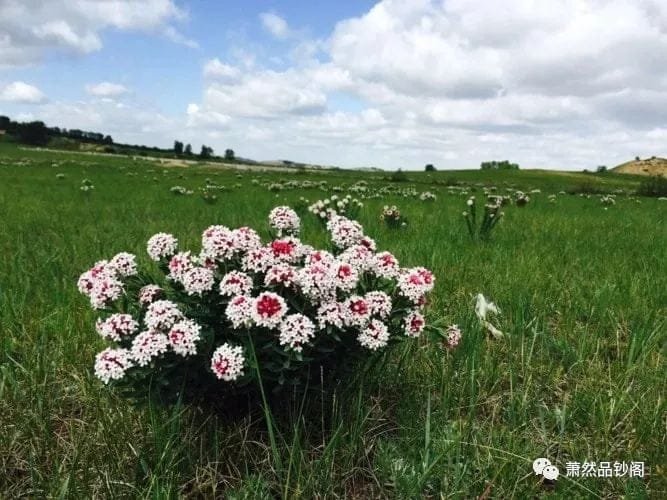
Flowering wolf poison grass
Furthermore, a distinct organization named "Aiba Yundan" was established to detect fake currency. Gongcheng Banjue inscribed the banknote number manually and affixed a rectangular coinage black emblem on the right-hand side of the banknote's front. This process of manually inscribing the concealed banknote number persisted until 1959.
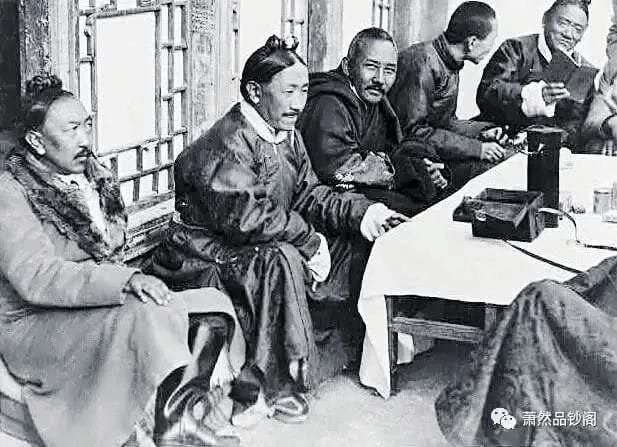
Regent Dazza, acting for the Revital regime
With the consent of Regent Daza, who acted on behalf of the Reting administration, he produced 5 taels of Tibetan silver, 10 taels of coloured bills in 1941, and 25 taels of Tibetan silver in 1949.
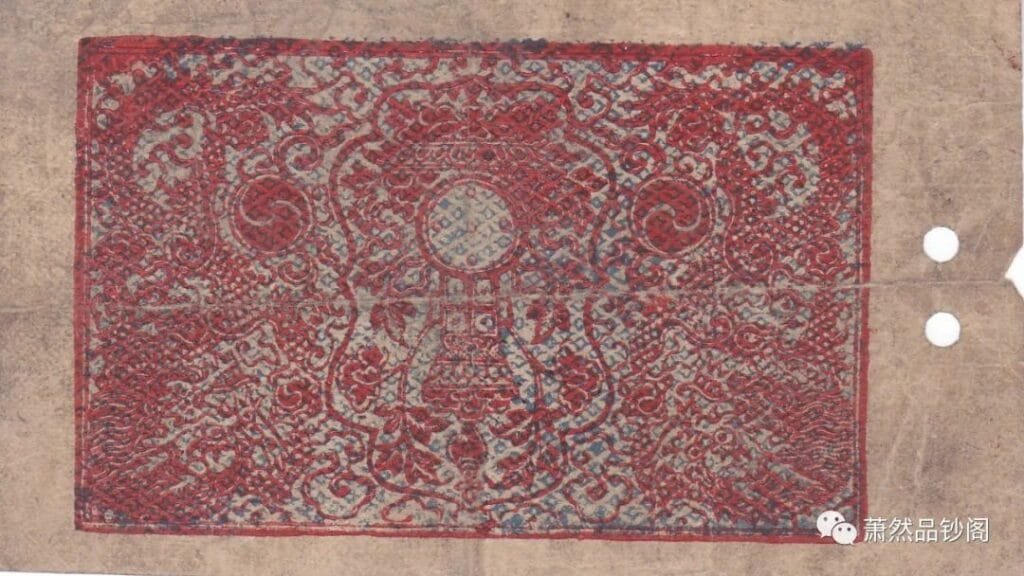
5 taels of Tibetan silver

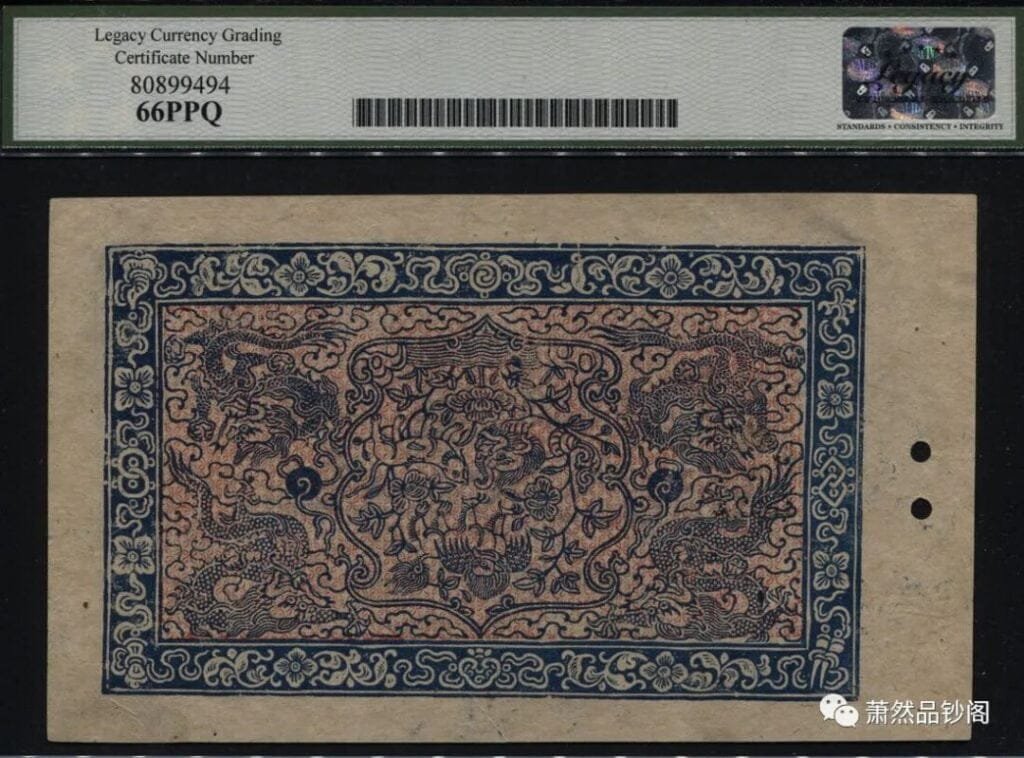
10 taels of silver notes
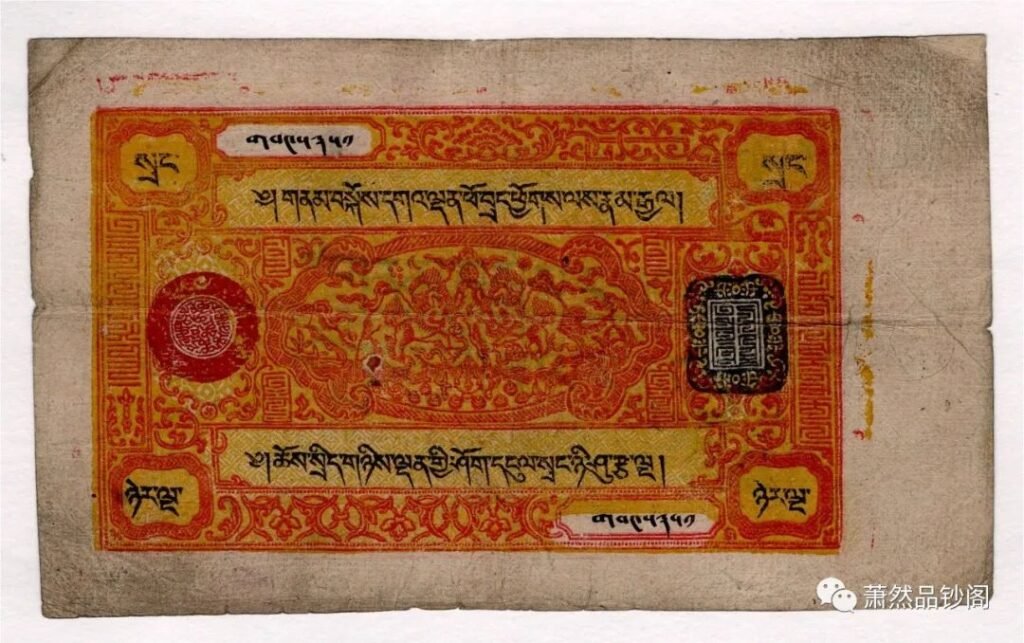
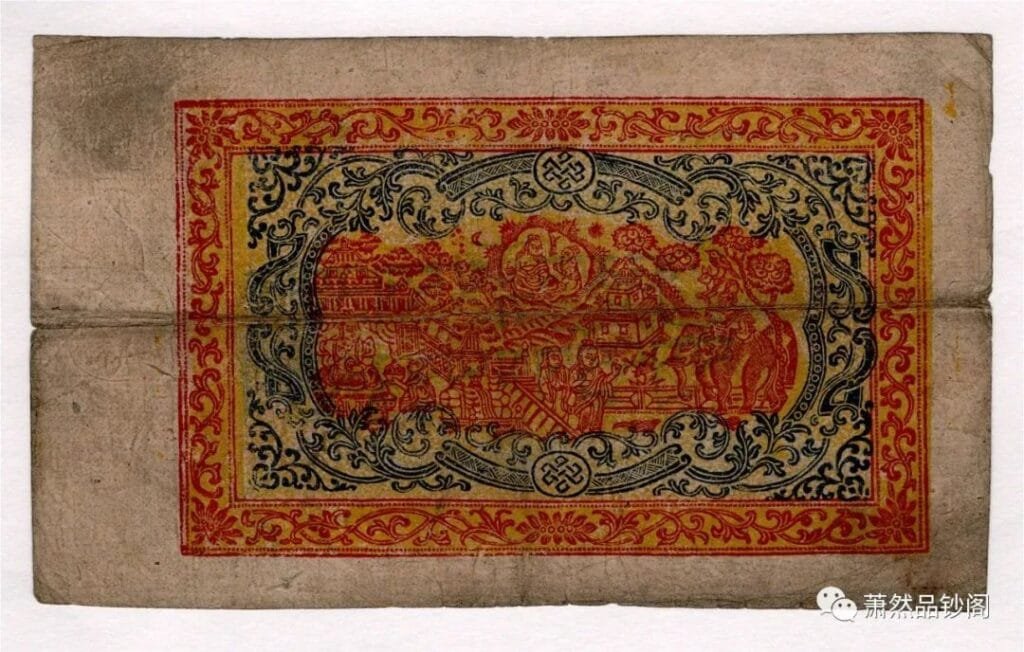
25 taels of silver
In 1945, in order to produce 100 silver banknotes, approximately 204 kilograms of gold were specially procured to acquire the necessary raw materials for minting. The 100-denomination banknote from Tibet is also referred to as the "Tibetan Silver Banknote", and measures 214x138 mm, which is significantly larger than the currently circulating 100-yuan red banknote of the RMB, which measures 155x77 mm. It is the most exquisite among the nearly 10 circulating banknotes issued by the former Tibetan local government, with the highest face value, largest dimensions, the longest period of issuance, and the most intricate colour overprinting design.
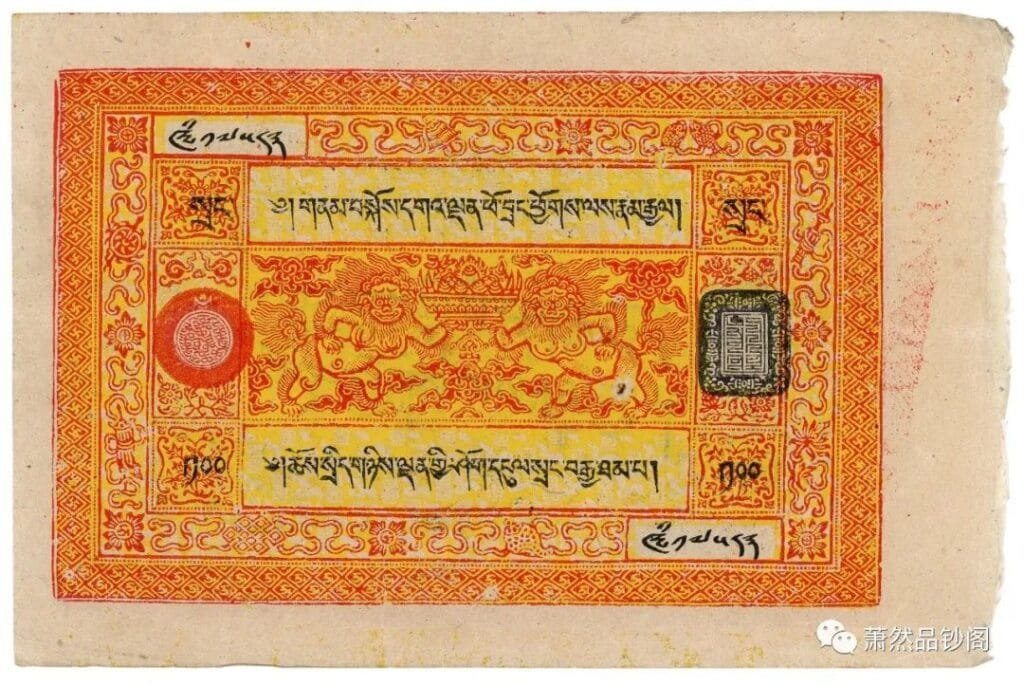
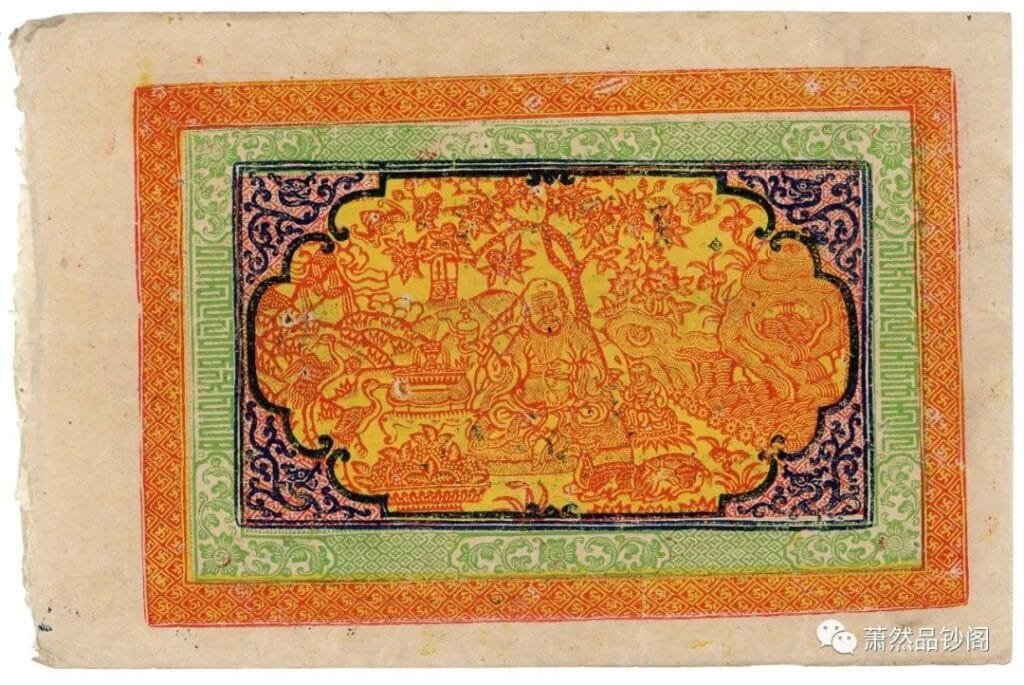
100 taels of Tibetan silver
In 1937, under the endorsement of Tibet's regent Reting, an iron-shaped etching plate was employed to mechanically produce a series of one hundred Tibetan silver note sets. The fifty-Trangka note bore the Dalai Lama red seal, while the rectangular newly-carved seal of the Drachi Mint was still utilized.
Following the peaceful liberation of Tibet in 1959, the Tibet Autonomous Region's Preparatory Committee released a statement on August 10th of that year, with the approval of the central government, regarding the acceptance of Tibetan currency: "Tibetan silver 100 two-colour notes can be exchanged for 2 yuan."
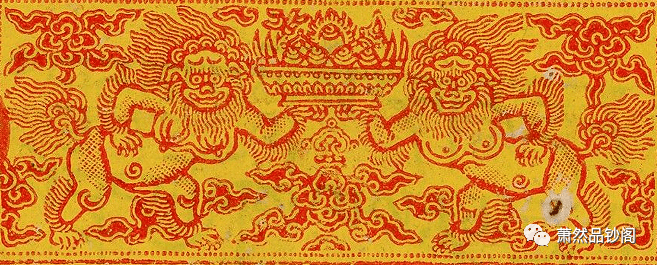
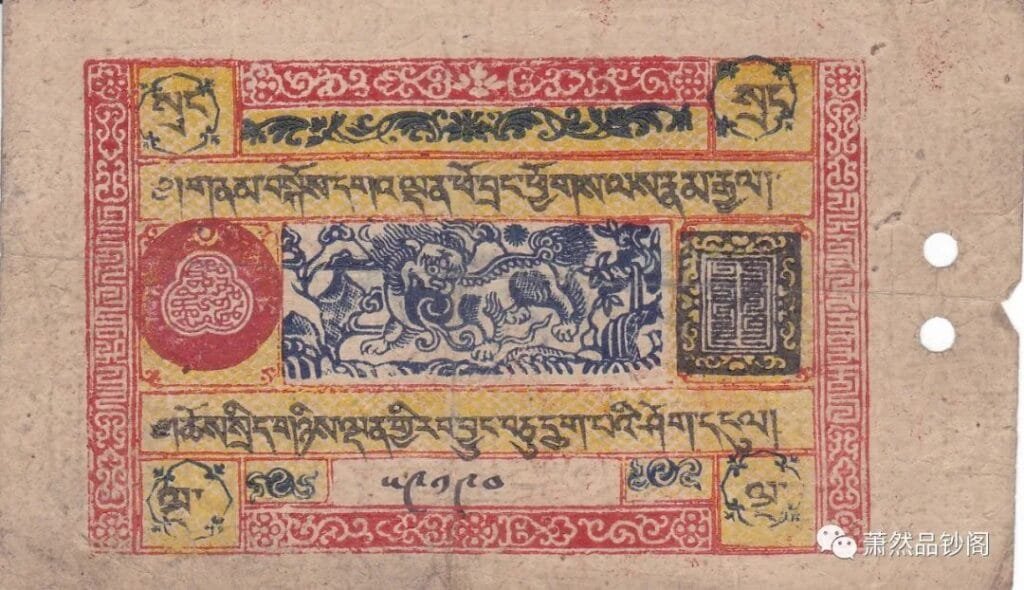
The 100 pairs of Tibetan silver notes feature a horizontal design at the centre of the front, measuring approximately 96.6 mm in length and 37.5 mm in width. The design showcases a red map set against a yellow background, with a pair of human-like lion-faced creatures facing each other. These creatures are also referred to as the "five-faced king" and hold up a treasure basin surrounded by auspicious clouds using their front paws. Furthermore, the notes have three layers of paperback borders, including an inner, middle, and outer layer. The inner frame is adorned with black Tibetan text on a white pattern. The text reads "The Ganden Phodrang government in Tibet is invincible" at the top and "the unity of politics and religion into one hundred taels of Tibetan silver" at the bottom.

The local government of Tibet is invincible.

The unity of politics and religion is one hundred taels of Tibetan silver.
Within the rectangular frame having four corners, a Tibetan numeral in black is placed on top of a red floral and grass design against a yellow backdrop. The Tibetan numeral "two" is inscribed in the upper left and right corners, while the lower left and right corners feature a Tibetan lowercase currency symbol with a value of "100".

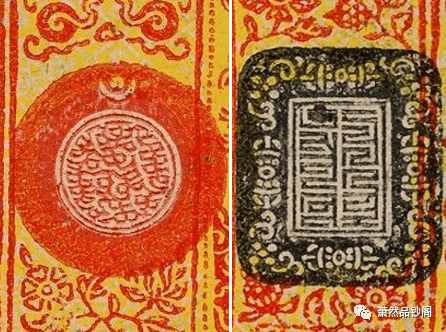
The flowers and clouds are imprinted on both the left and right edges of the inner border, with the left featuring the Dalai Lama seal in a circular shape and coloured red, while the right showcases the Phagpa letter seal in a rectangular form and coloured black.
The centre panel is uniformly adorned with eight propitious images set against a white backdrop embellished with red designs, with two on either side. The uppermost panel showcases the Victory Bell and Pisces, while the bottom panel exhibits the auspicious knot and the conch.

Victory Bell and Pisces

Auspicious knot and snail
On the left are the warping wheel and the umbrella, and on the right are the vase and the lotus flower.
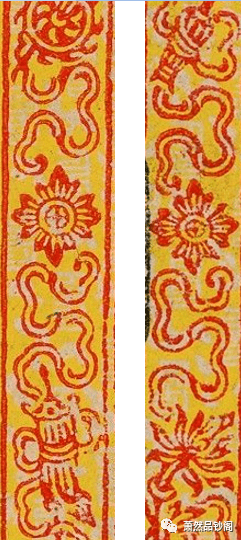
The upper box's left side and the lower box's right side have concealed handwritten banknote numbers. The red diamond grid pattern adorns the outer frame on a yellow background, and the diamond grid also features Tibetan letters and ten thousand-character ornaments.
The reverse side of the 100 taels banknote displays two saints seated beneath a lime tree. The elderly saint holds a magical bottle, which represents fertility, and two bats, symbolizing happiness and wealth. Two cranes on the left, are symbolizing longevity. While two deer on the right, lying on the ground represent prosperity.

The accumulation of currency notes has transformed into a significant event in the chronicles of Tibet's currency distribution. The formerly concealed note is now more of an antique artwork, a "painted picture scroll" that embodies the legacy and traditions of Tibet.
https://tourtraveltibet.com/tibetan-banknotes-the-official-currency-used-before-1959/


0 Comments